

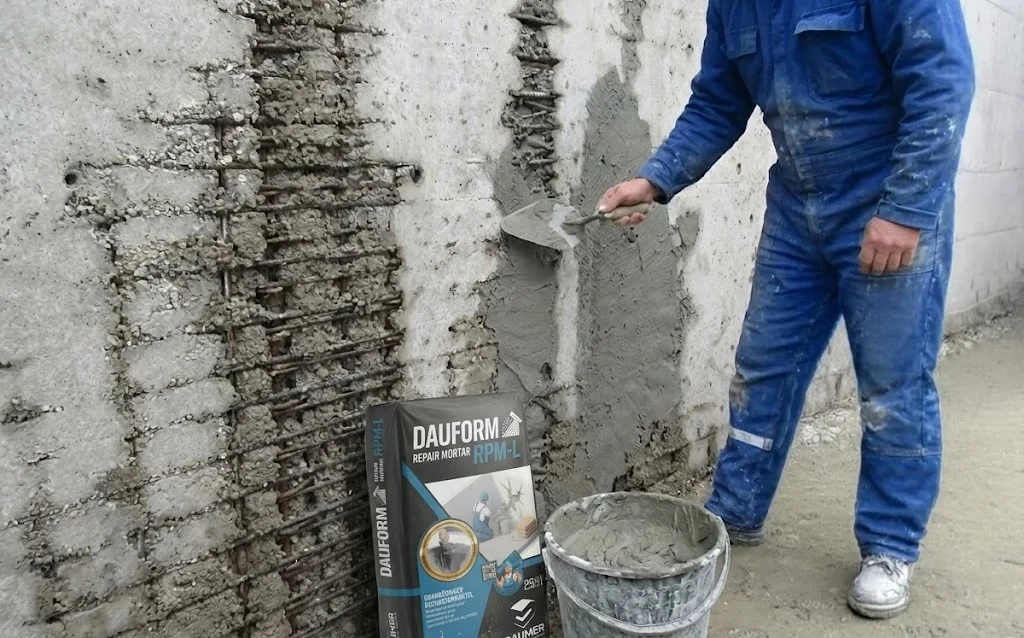
Cracks, spalling, and surface defects that occur over time on interior and exterior walls are not just aesthetic issues; they invite moisture and water ingress that shorten a building’s lifespan. The biggest mistake made on job sites is trying to fill a deep crack or plaster spalling with a standard sand-cement mix. Because these amateur mixes shrink, they quickly re-crack and debond.
The Solution: Standard-Compliant Technical Mortars and Satin Finishing
For a proper surface rehabilitation, actions must be taken according to the depth of the damage:
- Fine Surface Repairs: For plaster imperfections and non-structural fine surface profiling, R3-class DAUFORM RPM-S fine repair mortar should be used due to its high bonding strength.
- Deep Cracks and High-Build Filling: For repairing wide cracks and preparing thick substrates before tiling or painting, high-strength R4-class DAUFORM RPM-L thick repair mortar must be preferred.
- Flawless Pre-Paint Preparation: Once repairs are complete, a final coat of exterior-grade, white cement-based DAUFORM PROFP50 satin plaster should be applied to create a smooth, sag-free, and crack-free finish.